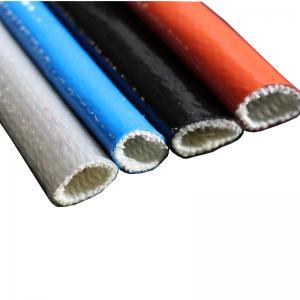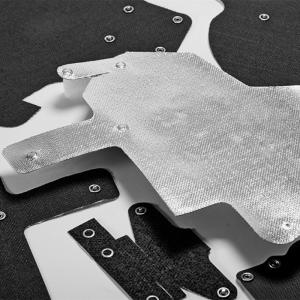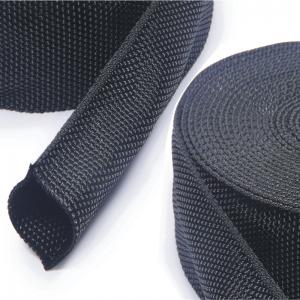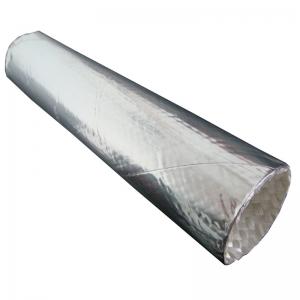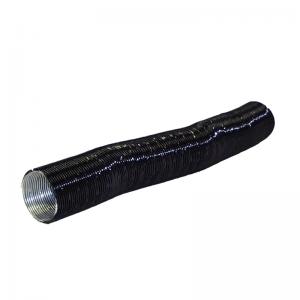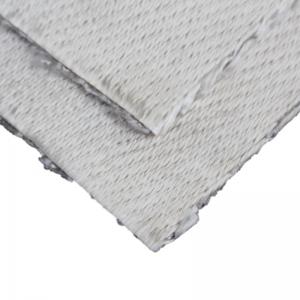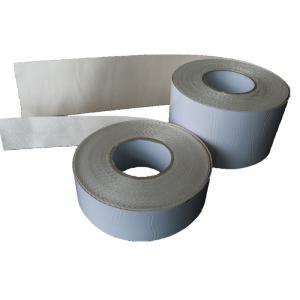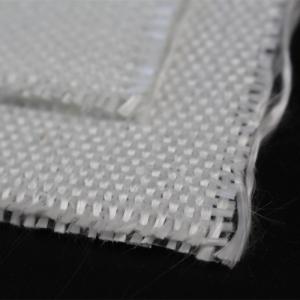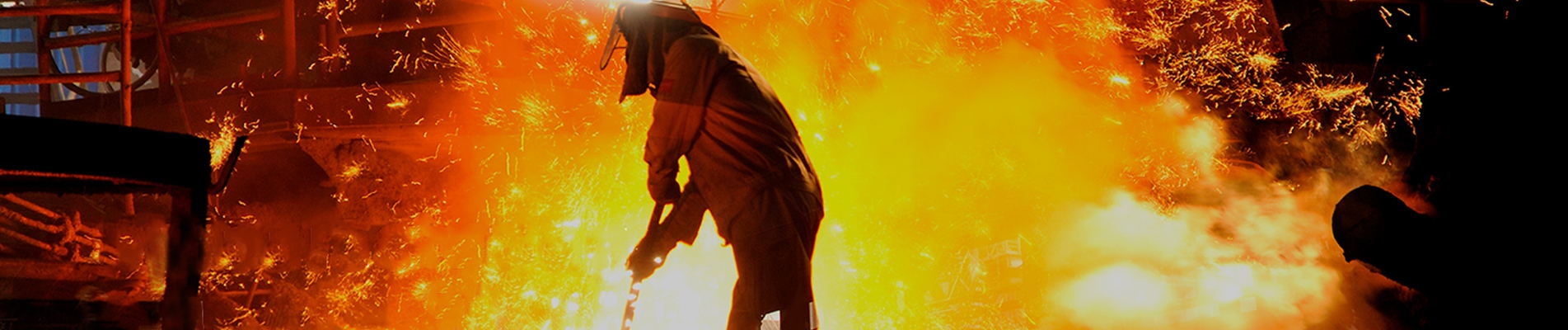
AGewebedehnungsfugeEs handelt sich um eine flexible Verbindung, die in industriellen Lüftungskanälen installiert wird, um Bewegungen zwischen Anlagenteilen oder Kanalsystemen auszugleichen. Anstatt Wärmeausdehnung, Vibrationen oder Ausrichtungsänderungen in starre Stahlkonstruktionen zu erzwingen, verformt sich der flexible Abschnitt bei Bewegung des Systems.
Gewebekompensatoren werden häufig in Systemen eingesetzt, die Heißluft, Abgase, Rauchgase und andere gasförmige Prozessmedien transportieren. Ihr flexibles Element kann aus technischen Geweben, beschichteten Geweben, gasdichten Membranen, Verstärkungsschichten und einer auf die jeweiligen Betriebsbedingungen abgestimmten Wärmedämmung bestehen.
Da das flexible Element nichtmetallisch ist, wird diese Art von Verbindung auch allgemein als bezeichnetnichtmetallische Dehnungsfugeodernichtmetallische GewebedehnungsfugeDie
Für kundenspezifische Industriedesigns sieheBSTFLEX Nichtmetallische Gewebe-DehnfugeDie
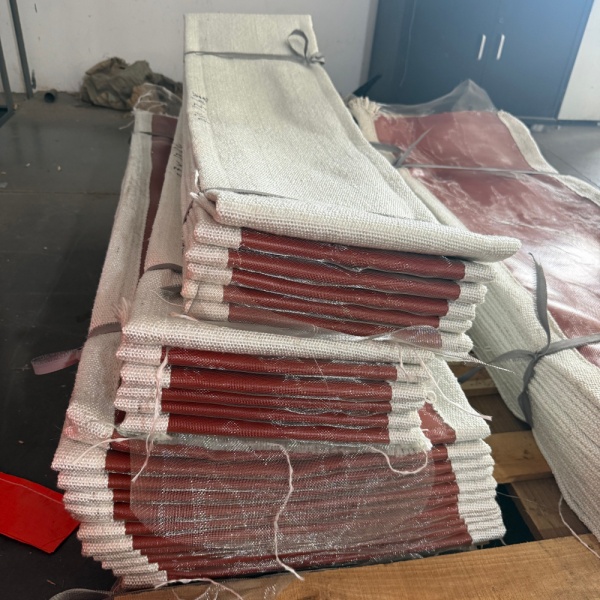
Ein Gewebe-Dehnungsfugenprofil ist ein speziell entwickeltes, flexibles Bauteil, das zwischen zwei relativ starren Teilen eines Kanalsystems angeordnet ist. Es ermöglicht eine kontrollierte Bewegung und gewährleistet gleichzeitig die erforderliche Verbindung zwischen diesen Teilen.
Industrielle Rohrleitungen behalten ihre Abmessungen im Betrieb selten unverändert bei. Wenn sich ein Ofen, Kessel, eine Abgasanlage oder ein Prozessrohr erhitzt, dehnt sich die umgebende Metallkonstruktion aus. Beim Abkühlen zieht sie sich wieder zusammen. Ventilatoren und rotierende Maschinen können zudem Vibrationen verursachen, und Montagetoleranzen können zu geringfügigen Abweichungen zwischen benachbarten Bauteilen führen.
Werden diese Bewegungen direkt durch starre Lüftungskanäle übertragen, können sie zusätzliche Belastungen auf folgende Bauteile ausüben:
Die Gewebeverbindung schafft eine flexible Zone, in der ein Teil dieser Bewegung stattfinden kann, ohne dass die gesamte Kanalstruktur als starre Konstruktion fungieren muss.
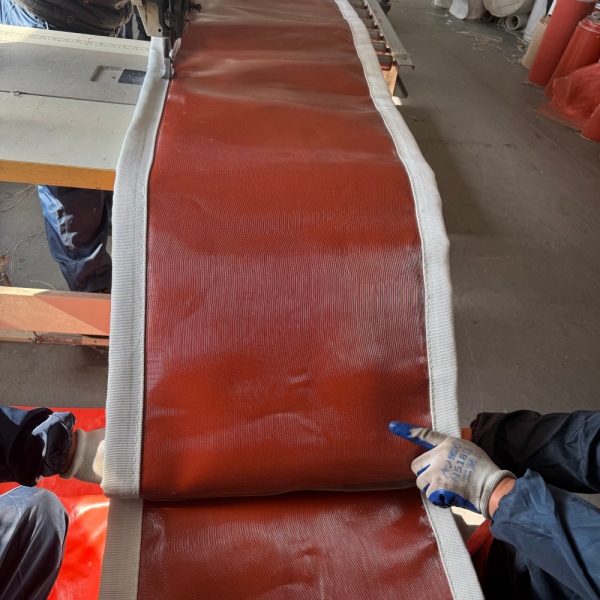
Der Begriffnichtmetallische Dehnungsfugebeschreibt das flexible Element und nicht jede einzelne Komponente der gesamten Baugruppe.
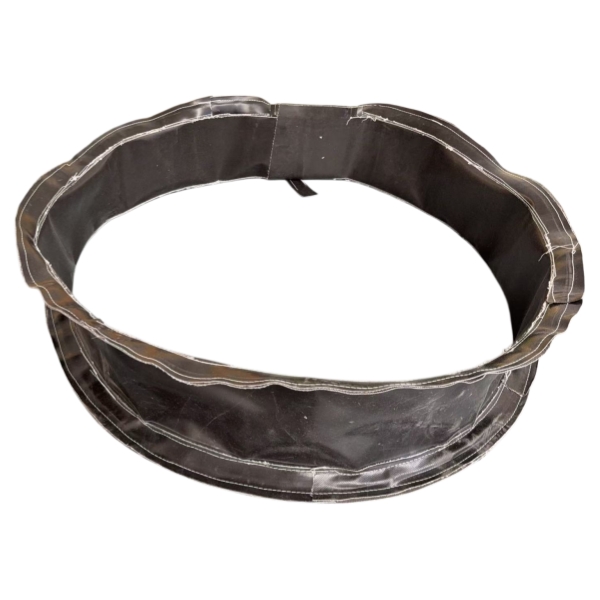
Metallrahmen, Klemmleisten, Auskleidungen oder andere Beschläge können weiterhin im Bereich des Gelenks verwendet werden. Der Abschnitt, der die primäre flexible Bewegung ausführt, besteht jedoch aus Gewebe, Elastomer, beschichtetem Textil, laminierter Membran oder einer Kombination dieser Materialien anstelle eines geformten Metallbalgs.
Diese Unterscheidung ist wichtig, weil sich textile und metallische Dehnungsfugen unterschiedlich verhalten.
Ein Metallbalg gleicht Bewegungen durch das Biegen geformter Metallfalten aus. Ein Gewebekompensator nutzt die Flexibilität seines Textil- oder Verbundgurtes, um seine Form an die Bewegung des Kanals anzupassen.
Bei großen Industriekanälen, insbesondere solchen, die gasförmige Medien bei relativ niedrigem Druck transportieren, bietet diese Konstruktion eine beträchtliche Bewegungsfreiheit auf engstem Raum.
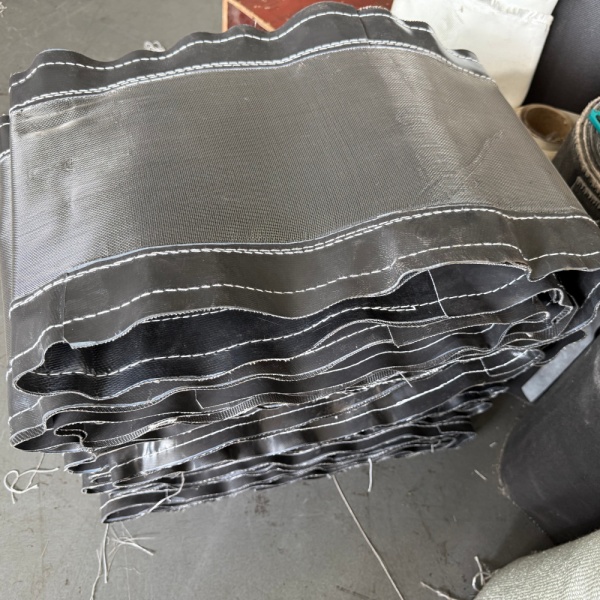
Das grundlegende Funktionsprinzip ist einfach.
Stellen Sie sich zwei Abschnitte eines Warmwasserkanals vor, die durch einen definierten Spalt getrennt sind. Ein flexibles Textilelement überbrückt diesen Spalt und ist an jedem Kanalabschnitt fest angebracht.
Wenn sich die Lüftungskanäle erwärmen und ausdehnen, verändert sich der Abstand bzw. die Ausrichtung zwischen den beiden Abschnitten. Anstatt dieser Bewegung wie eine starre Verbindung entgegenzuwirken, ändert der flexible Riemen seine Form.
Je nach Ausführung kann das Gelenk auf verschiedene Bewegungsarten reagieren.
Eine axiale Kompression tritt auf, wenn der Abstand zwischen den beiden Kanalabschnitten entlang der Mittellinie kleiner wird.
Dies tritt häufig auf, wenn die Wärmeausdehnung dazu führt, dass sich ein Abschnitt des Lüftungssystems auf einen anderen zubewegt. Die flexible Spannweite wird kontrolliert zusammengedrückt oder gefaltet, um die verringerte Distanz auszugleichen.
Die axiale Dehnung ist der umgekehrte Fall. Der Abstand zwischen den Verbindungsabschnitten vergrößert sich entlang der Längsachse.
Das Stoffelement muss über genügend freie Geometrie verfügen, um sich dehnen zu können, ohne überdehnt zu werden.
Eine seitliche Bewegung tritt auf, wenn sich eine Kanalverbindung relativ zur anderen seitlich verschiebt.
Dies ist besonders wichtig bei großen Kanalsystemen, wo Gerätebewegungen, thermische Ausdehnung in eine andere Richtung oder die Installationsgeometrie eher einen Versatz als eine einfache Kompression oder Dehnung bewirken.
Eine Winkelbewegung tritt auf, wenn die beiden Verbindungsflächen nicht mehr parallel verlaufen.
Der flexible Riemen verformt sich ungleichmäßig an seinem Umfang, wodurch sich eine Seite zusammendrückt, während sich ein anderer Abschnitt ausdehnt.
Reale industrielle Systeme bewegen sich nicht immer nur in eine Richtung. Axiale, laterale und Winkelverschiebungen können gleichzeitig auftreten.
Dies ist ein Grund dafür.Dehnungsfuge für TextilkanäleDies ist besonders nützlich bei komplexen Kanalanordnungen. Die Geometrie der Verbindungsstellen kann anhand der zu erwartenden Bewegungskombinationen ausgelegt werden, anstatt jede Verschiebung einzeln zu behandeln.
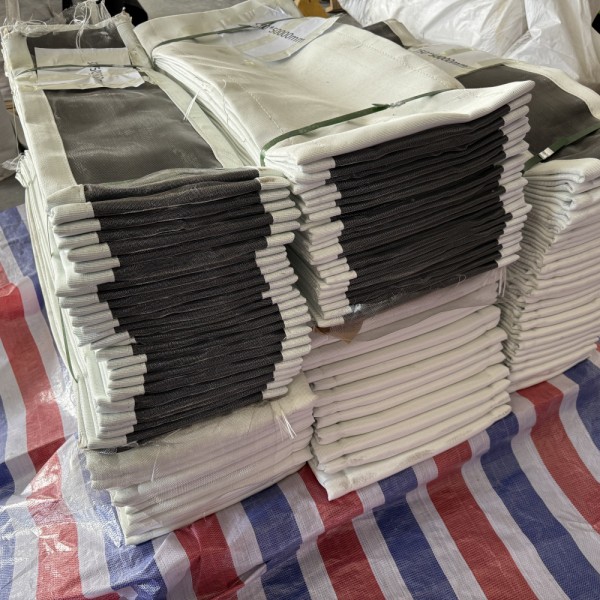
Die Wärmeausdehnung ist der bekannteste Grund für den Einbau einer Dehnungsfuge, aber nicht der einzige.
Die Notwendigkeit einer vollständigen Bewegung kann sich aus verschiedenen Betriebsbedingungen ergeben.
| Ursache | Was geschieht im System? | Funktion der Dehnungsfuge |
|---|---|---|
| Wärmeausdehnung | Metallrohre dehnen sich bei steigender Temperatur aus. | Ermöglicht kontrollierte Dimensionsbewegung |
| Thermische Kontraktion | Zusammenziehen der Lüftungskanäle während des Abschaltvorgangs oder der Kühlung | Allows the system to return toward its cold position |
| Fan Vibration | Mechanical vibration is transferred from rotating equipment | Provides a flexible connection between equipment and ducting |
| Misalignment | Connecting duct faces may not be perfectly aligned | Can accommodate specified offsets within the joint design |
| Structural Movement | Supports or equipment may move relative to each other | Provides a controlled flexible section |
| Operating Cycles | Repeated heating and cooling creates cyclic movement | Accommodates repeated dimensional changes when correctly designed |
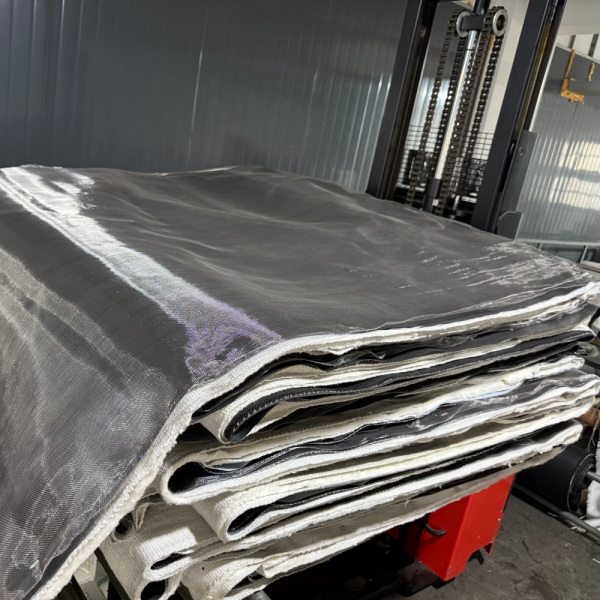
A fabric expansion joint should not be viewed simply as a piece of cloth connecting two ducts.
The flexible section is an engineered material system. Depending on service conditions, it may use a single flexible layer or several different layers, each selected for a specific function.
The outer layer forms part of the flexible envelope and may also provide resistance to weathering, environmental exposure or external mechanical conditions.
This layer helps contain the process gas. Its material must be compatible with the expected temperature, gas composition, moisture and chemical exposure.
Reinforcement provides mechanical support and dimensional stability to the flexible element. Fiberglass and other technical textile constructions are commonly considered depending on temperature and mechanical requirements.
High gas temperature does not necessarily mean every layer of an expansion joint should be exposed directly to that temperature.
An insulation package can reduce heat transfer from the process side toward temperature-sensitive sealing or outer layers.
Hot gas velocity, ash, dust or abrasive particles can damage an unprotected flexible surface. Some systems therefore require an internal liner, baffle or other protection to shield the joint from direct gas flow and particulate impact.
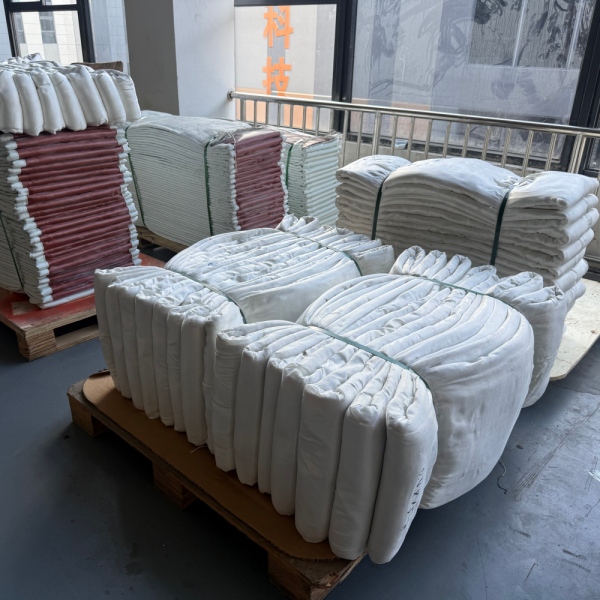
One material rarely provides every property required by a severe industrial application.
For example, a material with excellent temperature resistance may not provide the best gas sealing. A highly flexible sealing material may require reinforcement. A chemically resistant membrane may need insulation to keep its operating temperature within an acceptable range.
As a result, manyfabric expansion jointsuse a combination of materials rather than one fabric performing every function.
Typical material families include:
BSTFLEX also manufactures a broad range ofhigh temperature fabrics, allowing material construction to be evaluated according to thermal, chemical and mechanical requirements.
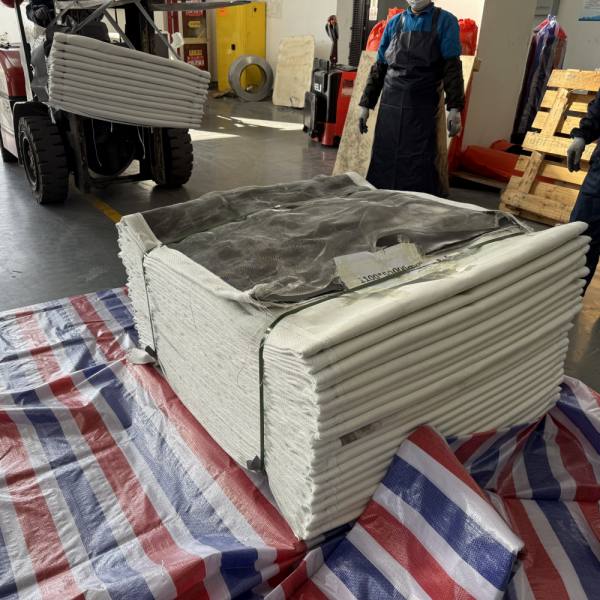
Fabric joints are mainly associated with industrial gas-handling and ducting systems rather than conventional high-pressure liquid piping.
Typical applications include the following.
Boilers, furnaces and combustion equipment can generate hot flue gases that must travel through large duct networks. These ducts experience significant dimensional change between ambient and operating temperatures.
Exhaust ducts connected to engines, industrial furnaces, thermal processing equipment or pollution-control systems may require movement compensation between hot equipment and downstream ducting.
Power plants use large gas-handling systems around boilers, fans, air-handling equipment and emission-control installations. Thermal growth and vibration can occur at multiple connection points.
Cement production combines heat, large duct dimensions, dust and continuous process operation. Flexible expansion sections may be required around kiln-related systems, fans and process ducts.
High-temperature furnaces, hot-air systems and exhaust ducts in steel and metal-processing plants can generate significant thermal movement.
Placing a flexible connection between rotating equipment and rigid ducting can help prevent all equipment movement from being transmitted directly into the surrounding duct structure.
Large ducting systems used with filtration, scrubber, flue-gas treatment and other air-pollution-control equipment often need flexible connections between process components.
Both products are intended to manage movement, but they should not be considered interchangeable simply because they share the term “expansion joint.”
| Characteristic | Fabric Expansion Joint | Metallic Bellows |
|---|---|---|
| Flexible Element | Fabric, coated textile or composite membrane | Formed metal bellows |
| Common Application | Large industrial ducts and gaseous-media systems | Industrial piping and engineered duct or process systems |
| Movement Method | Flexible belt changes geometry | Metal convolutions flex |
| Large Duct Sizes | Well suited to custom large cross-sections | Requires application-specific metallic design |
| Multidirectional Movement | Can accommodate several movement directions in one flexible section | Depends on bellows geometry and assembly design |
| Material System | Can combine several fabric, coating and insulation layers | Primarily determined by metallic alloy and bellows construction |
Pressure, temperature, process medium, movement, duct size and system design must all be considered before deciding which expansion joint technology is appropriate.
A flexible joint can help isolate vibration between connected components because its flexible element does not behave like a completely rigid metal duct section.
This is useful near fans, blowers and other equipment that produces mechanical vibration.
However, vibration should still be treated as an engineering input. Frequency, amplitude, equipment arrangement and joint geometry all influence performance. A fabric expansion joint should not be selected only because a system is described as “vibrating.”
There is no universal movement value that applies to every fabric expansion joint.
Movement capability depends on:
For this reason, axial, lateral and angular movements should be stated separately when specifying a custom expansion joint.
A request such as “50 mm total movement” is less useful than specifying how that movement occurs.
For example:
These values are examples of how movement information can be communicated, not standard ratings for every joint.
There is also no single temperature rating that defines all fabric expansion joints.
The allowable process temperature depends on the complete construction.
A high-temperature joint may be designed so that the process-side protection and insulation reduce the temperature reaching the gas-sealing membrane and external flexible layers.
Temperature selection should therefore consider:
This is why specifying only “high temperature fabric expansion joint” is insufficient for engineering selection.
A manufacturer needs more than the nominal duct dimensions to select a reliable construction.
The most useful project information includes:
| Design Information | Typical Details Required |
|---|---|
| Duct Geometry | Round, rectangular, square or special shape |
| Dimensions | Diameter or width and height |
| Face-to-Face Length | Available installation distance |
| Temperature | Normal and maximum process temperature |
| Pressure | Positive or negative operating and design pressure |
| Process Medium | Hot air, flue gas, exhaust gas or other process gas |
| Axial Movement | Compression and extension |
| Lateral Movement | Required transverse offset |
| Angular Movement | Required angular displacement |
| Chemical Conditions | Acidic, alkaline, moisture or other process exposure |
| Particulate Loading | Dust, ash or abrasive particles |
| Installation Environment | Indoor, outdoor, weather exposure or confined area |
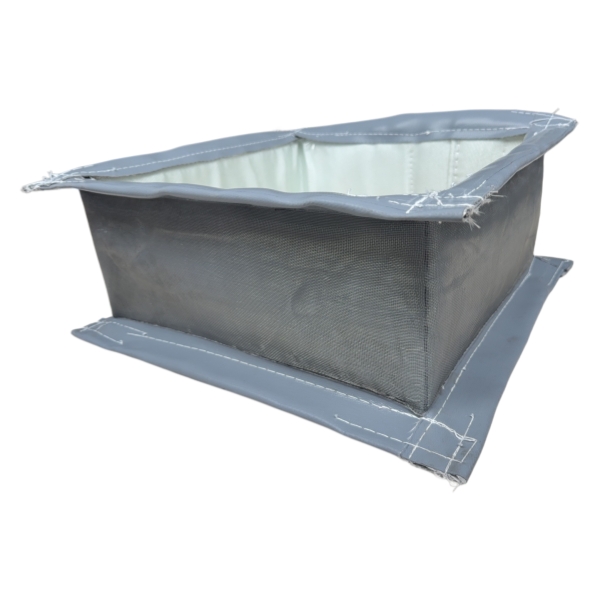
Anon metallic expansion jointshould be considered when an industrial ducting system needs flexibility and the operating conditions are suitable for a fabric-based construction.
Typical reasons include:
The final decision should always be based on actual system conditions rather than the product name alone.
Some basic constructions can be standardized, but industrialfabric expansion jointsare frequently customized.
Two ducts with the same dimensions may require completely different expansion joints if they operate at different temperatures, carry different gases or experience different movements.
Important differences may include:
This is why drawings and operating data are particularly valuable when sourcing replacement or OEM fabric expansion joints.
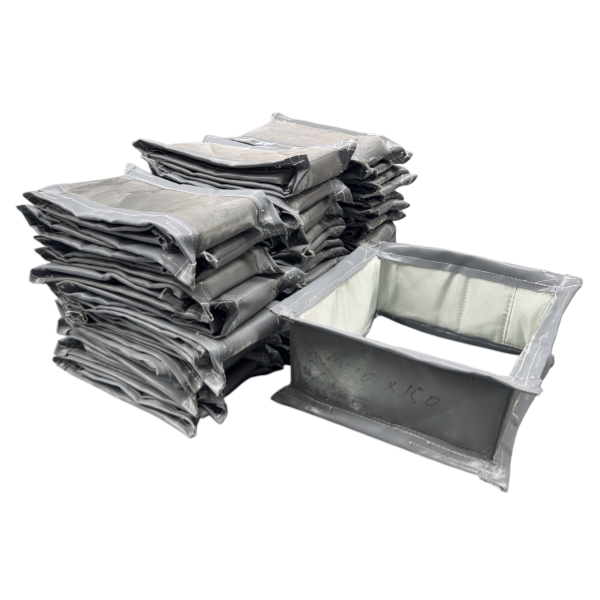
Rectangular joints are widely used on large industrial duct systems. Their corner sections require careful design because the flexible element does not deform identically along straight sides and corners.
Round joints are used on circular ducting, fan connections and exhaust systems. The circumference provides a continuous attachment surface around the duct.
Square configurations are similar in principle to rectangular designs but may be required by specific duct or equipment layouts.
Transitions, non-standard dimensions and application-specific geometries can be manufactured when existing industrial equipment cannot accept a standard shape.
Expansion joint service life depends heavily on correct specification and installation.
Potential failure mechanisms include:
A damaged joint should therefore not automatically be replaced with an identical copy without understanding why the original unit failed.
For replacement projects, operating history can be as valuable as dimensional information.
In industrial ducting, the terms are often used for closely related products. A fabric expansion joint uses a flexible non-metallic fabric or composite element, so it falls within the broader non-metallic expansion joint category. The exact terminology varies by industry and construction.
It provides a flexible connection between sections of industrial ductwork so thermal expansion, contraction, lateral displacement, angular movement, vibration and specified misalignment can be accommodated without making the connection completely rigid.
Typical locations include industrial exhaust ducts, flue-gas systems, furnace and boiler ductwork, fan connections, cement plants, power-generation equipment, steel-processing facilities and air-pollution-control systems.
Yes. Depending on the design, they can accommodate axial compression, axial extension, lateral movement, angular movement and combinations of these movements.
No. Fiberglass is an important reinforcement and high-temperature textile, but complete expansion joints may combine coated fiberglass, PTFE-coated fabric, silicone-coated textiles, silica fabrics, insulation and other materials according to operating conditions.
Ja, wenn das gesamte Materialsystem auf die tatsächliche Prozesstemperatur und die Gasbedingungen ausgelegt ist. Hochtemperaturanwendungen erfordern häufig mehrere Funktionsschichten und einen geeigneten Schutz zwischen dem heißen Gasstrom und dem flexiblen Dichtungselement.
Nicht automatisch. Textil- und Metall-Kompensatoren weisen unterschiedliche Druck-, Bewegungs-, Temperatur- und mechanische Eigenschaften auf. Die Systembedingungen müssen vor einem Wechsel der Kompensatortechnologie geprüft werden.
Nützliche Informationen umfassen Kanalbreite und -höhe bzw. -durchmesser, Einbaulänge, Flanschabmessungen, Schraubenanordnung, Verbindungsform und verfügbaren Einbauraum. Betriebstemperatur, Druck, Medium und Bewegungsanforderungen sind ebenfalls unerlässlich.
BSTFLEX entwickeltGewebedehnungsfugenFür industrielle Anwendungen in den Bereichen Lüftungskanäle, Abluft, Heißluft und Rauchgas. Die Konstruktion kann an runde, rechteckige, quadratische und Sonderform der Kanäle angepasst werden, wobei die Materialsysteme je nach Temperatur, Druck, Prozessmedium, Bewegung und Installationsbedingungen ausgewählt werden.
Wenn Sie ein neues System entwickeln oder eine bestehende Verbindung ersetzen, überprüfen Sie dieBSTFLEX Nichtmetallische Gewebe-DehnfugeProduktseite für verfügbare Konstruktions- und Anpassungsoptionen.
Für eine technische Bewertung senden Sie uns bitte Ihre Kanalabmessungen, die normale und maximale Temperatur, den Betriebsdruck, das Prozessmedium, die axiale Bewegung, die laterale Bewegung, die Installationslänge, die Menge und verfügbare Zeichnungen.
Fordern Sie ein individuelles Angebot für eine Gewebe-Dehnungsfuge an.

 English
 français
 русский
 italiano
 español
 português
 Nederlands
 العربية
 日本語
日本語 한국의
한국의 Türkçe
 Polski
 Tiếng Việt
 slovenský
 Indonesia