
A fiberglass braided hose sleeve can look simple on a quotation: choose a diameter, choose a length and slide it over the hose. In production, however, the braid geometry matters. As a tubular braid expands to pass over a larger hose, bend or fitting, its installed length and surface coverage can change.
For OEM purchasing, fiberglass braided sleeving should therefore be specified by the finished fit and installed coverage—not by nominal diameter alone. The cutting method and end treatment also need to be agreed before pre-cut pieces are released for production.
The BSTFLEX Fiberglass Braided Hose Sleeve is intended for mechanical abrasion protection and basic thermal buffering around hoses, pipes and cable assemblies. This guide focuses on three practical purchasing questions: how much the braid needs to expand, how much installed length is required, and how the cut ends should be controlled.
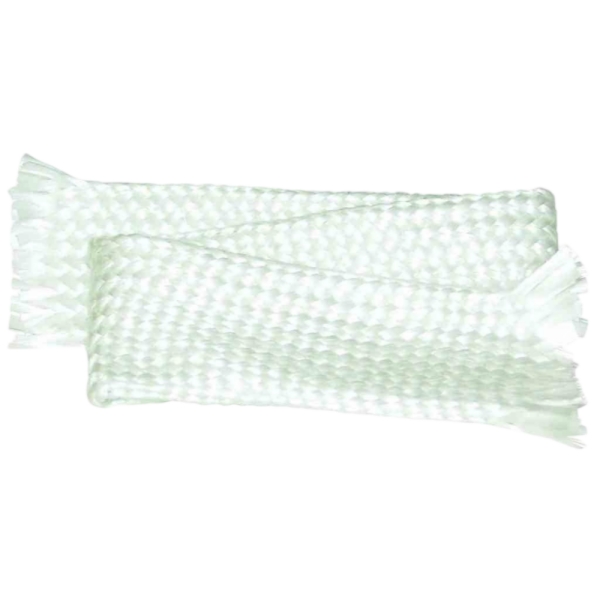
A tubular braid is made from yarns crossing at an angle. When the sleeve is pushed over a larger diameter, the braid opens radially and the yarn angle changes. This allows the sleeve to conform to bends and irregular sections, but it can also shorten the sleeve in the axial direction.
The amount of shortening is not one universal percentage. It depends on the specific braid construction, relaxed diameter, hose diameter, fitting profile and how close the sleeve is being used to its expansion limit. For that reason, a relaxed cut length should not automatically be assumed to equal the final protected length on the hose.
For repeat OEM assemblies, test the proposed sleeve on the actual hose or a representative fixture. Record both the relaxed cut length and the installed coverage after the sleeve has been fitted to the approved assembly.
Start with the finished hose outside diameter, but do not stop there. If the sleeve will be installed after fittings are attached, the largest coupling, ferrule, connector or transition in the installation path may determine the minimum usable expansion.
| Dimension to Record | Why It Matters |
|---|---|
| Hose outside diameter | Defines the normal installed diameter along the hose body. |
| Maximum fitting outside dimension | Determines whether the sleeve can pass over the largest feature during installation. |
| Nominal sleeve inside diameter | Provides the starting size for the braid in its specified condition. |
| Recommended fit or expansion range | Shows the range in which the supplier expects the braid to be used without excessive opening. |
| Required installed coverage | Defines the actual hose section that must remain protected after expansion and final positioning. |
A sleeve may be physically capable of passing over a large fitting yet still be a poor production choice if it has to operate near its maximum expansion for the full hose length. Excessive expansion can open the braid, reduce textile coverage and increase the difference between relaxed and installed length.
Two checks are required. The first is installation clearance: can the sleeve expand enough to pass over the largest fitting? The second is operating fit: after installation, does the sleeve sit appropriately on the hose body without excessive looseness or excessive braid opening?
When the fitting is much larger than the hose, a single nominal sleeve size may not provide the best balance. Evaluate the actual assembly before approving the size. If a different installation construction is needed, use the hydraulic hose protection selection page to compare other options rather than forcing an unsuitable braided sleeve over the assembly.
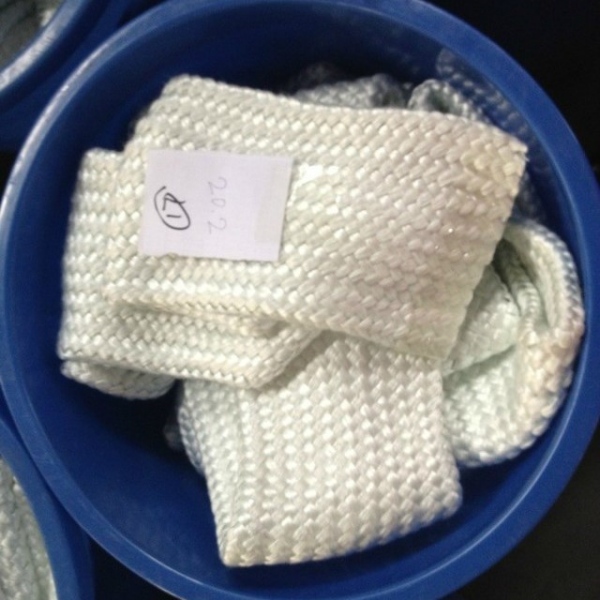
For pre-cut OEM pieces, the drawing should distinguish between:
These values may not be identical. If the assembly requires the sleeve to expand substantially, the relaxed piece may need to be longer than the final coverage requirement.
Do not use a generic percentage allowance unless it has been validated for the exact sleeve construction and hose size. The more reliable method is to fit a sample, measure the result and record the approved cut length for that part number.
A braid that looks dense on a straight hose can open differently around bends or larger sections. Inspect the final assembly at the areas that matter most: bends, hose-to-fitting transitions, clamps and known wear points.
For visual and purchasing control, agree what acceptable coverage means for the product. If the application needs a particular braid density, surface coverage or overlap appearance, define it with an approved sample or measurable specification rather than relying on terms such as “tight braid” or “heavy duty.”
The sleeve should not be selected so tightly that installation damages the hose cover or distorts the protective braid. It should also not be so loose that it migrates away from the intended wear zone.
Plain fiberglass braid can fray when it is cut. The amount of fraying depends on the yarn, braid construction, any surface treatment and the cutting method. For repeat production, define how the supplier will cut and handle the ends before the first batch is approved.
Do not assume that a hot knife used for thermoplastic braided sleeving will seal plain fiberglass in the same way. Fiberglass is not a thermoplastic sleeve material. The correct end-control method must match the actual construction being supplied.
Depending on the product specification and assembly method, cut-end control may involve an approved temporary wrap during handling, a compatible finishing tape, a mechanical clamp, a specified binder or coating, or another validated termination method. The chosen treatment must not create an unapproved thermal, chemical or installation issue.
If a coated or treated fiberglass grade is requested, confirm how the coating changes cutting, flexibility, abrasion behavior and end finishing. Do not transfer the cut-end method from an uncoated grade to a coated grade without verification.
| Cut-Piece Requirement | What to Agree Before Production |
|---|---|
| Finished piece length | Nominal cut length, tolerance and measurement condition. |
| End appearance | Maximum acceptable loose yarns or fraying after the agreed cutting process. |
| End treatment | Whether the part is supplied untreated, temporarily secured, coated, taped or otherwise finished. |
| Packaging | Pieces per bag or carton, part-number labeling and protection against end damage during transport. |
| First-article approval | Fit, installed coverage and end condition checked on the actual assembly before mass production. |
Roll supply can be appropriate when the hose assembler cuts several lengths locally. In that case, specify the roll length, whether the roll must be continuous, how any splices are handled and what cutting method is approved at the assembly site.
Pre-cut pieces can reduce local cutting work and improve repeatability for established assembly part numbers. They require tighter control of length tolerance, end condition, labeling and packaging. For a multi-SKU hose program, part-number identification can be more important than the nominal sleeve diameter alone.
BSTFLEX supports continuous-length and cut-piece supply for the Fiberglass Braided Hose Sleeve. Confirm the required diameter, piece length, total quantity and packaging format with the quotation.
Fiberglass is non-combustible, but that fact alone does not make every uncoated fiberglass braid a complete fire-protection system. The p195 product is positioned for abrasion protection and basic thermal buffering. It should not be selected as a substitute for a validated firesleeve where direct flame, fluid fire or higher-intensity thermal exposure is the governing requirement.
For hydraulic lines that require a dedicated silicone-coated fire sleeve, review the hydraulic hose fire sleeve separately. Keep the performance evidence and target keywords of the two product families distinct.
For an efficient sample and quotation process, provide:
Where the fit is uncertain, send a hose drawing or representative sample. A first-article installation check is more reliable than choosing only from a nominal sleeve diameter.
BSTFLEX supports application review, sample development and repeat-order specifications through its OEM and custom manufacturing services. Record the approved sleeve size, cut length, installed coverage and end condition so future orders can be reproduced against the same purchasing specification.
It can. Radial expansion changes the geometry of the braid and may reduce installed length. The actual change depends on the sleeve construction and the diameter over which it is installed. Validate the cut length on the real assembly rather than using a universal shrink percentage.
Both dimensions matter. Hose OD determines the normal installed fit, while the largest fitting or connector determines the pass-through requirement when the sleeve is installed from an end.
Do not assume so. Hot knives are commonly used to fuse thermoplastic braided sleeving, but plain fiberglass does not behave like a thermoplastic material. Use the cutting and end-control method approved for the actual fiberglass construction.
The BSTFLEX product page lists continuous lengths and cut pieces as supply options. For pre-cut orders, specify the length tolerance, end condition, identification and packaging before production approval.
For the BSTFLEX Fiberglass Braided Hose Sleeve, send the hose OD, maximum fitting size, required installed coverage, cut-piece or roll requirement, quantity and operating conditions.
Contact BSTFLEX with your drawing, sample or purchasing specification. If the application combines abrasion, retrofit access, flame exposure or mechanical guarding, use the hydraulic hose protection selection page to compare the appropriate constructions before ordering.

 English
 français
 русский
 italiano
 español
 português
 Nederlands
 العربية
 日本語
 한국의
 Türkçe
 Polski
 Tiếng Việt
 slovenský
 Indonesia