English
 français
 русский
 italiano
 español
 português
 Nederlands
 العربية
 日本語
 한국의
 Türkçe
 Polski
 Tiếng Việt
 slovenský
 Indonesia



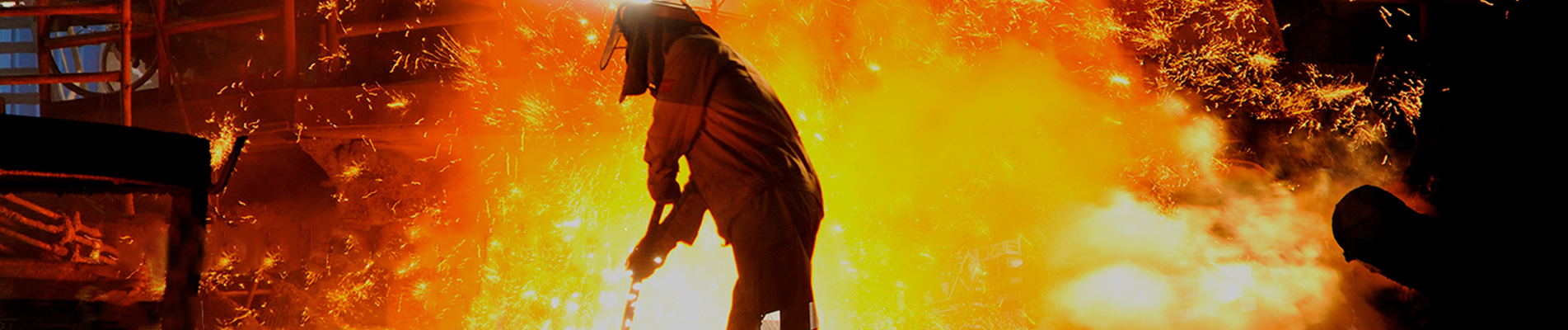
An industrial oven insulation specification should describe more than a blanket thickness. The required layer depends on the oven design, the temperature at the insulation location, the available installation space, the support method and the maintenance plan. A material that fits a flat wall panel may need a different installation detail around a door frame, corner, roof section or removable access panel.
When specifying ceramic fiber blanket for an industrial oven, define the fiber grade, thickness, density, operating cycle, installed compression, joint arrangement and acceptance checks together. This gives the equipment manufacturer, insulation fabricator and purchasing team a common basis for evaluating the material and the completed lining.
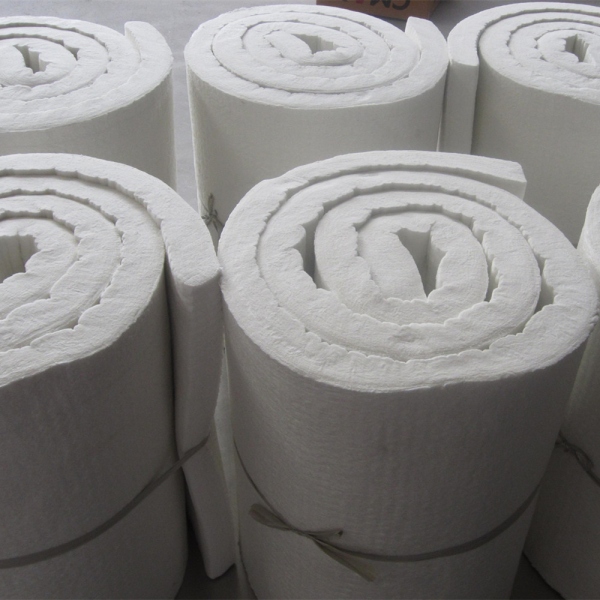
BSTFLEX supplies ceramic fiber insulation blanket for industrial insulation applications, including furnace and oven wall-gap insulation. This guide focuses on the information buyers should provide before requesting a sample or quotation. It does not assign one temperature rating to every ceramic fiber grade or every installed oven construction.
Start With the Oven Section Being Insulated
Before selecting a blanket, identify where it will be installed. An industrial oven may contain several insulation zones, each with a different temperature, support arrangement and access requirement.
- Side walls: Identify whether the blanket is installed behind a protective hot-face layer, inside a panel cavity or against another lining material.
- Roof and overhead sections: Describe how the insulation is supported and retained. Gravity, vibration and maintenance access can affect the installation design.
- Floor and lower wall areas: State whether the material is exposed to loads, impact, cleaning activity or process residues. A flexible blanket should not be treated as a load-bearing floor material unless the complete design specifically qualifies it.
- Door frames and access panels: Provide opening dimensions, closure arrangement and available insulation depth. Identify whether the insulation is fixed to the door or remains in the oven body.
- Ducts and transition sections: Mark changes in cross-section, corners, penetrations and joints where gaps or excessive compression may occur.
A drawing with the insulation zone marked is more useful than an oven model name alone. If one order covers several zones, list them separately rather than assuming that one blanket specification suits every location.
Define the Actual Thermal Duty
The oven set point is not necessarily the temperature experienced by the ceramic fiber blanket. The insulation may be behind a hot-face lining, next to an air space or close to the outer casing. Each position can produce a different temperature profile.
Include the following information in the inquiry:
- normal operating temperature and the location where it is measured;
- maximum or short-duration peak temperature, with its duration;
- start-up, shutdown and other heating or cooling cycles;
- continuous operating hours and expected annual operating pattern;
- oven atmosphere and any relevant process gases or chemical exposure;
- temperature at the hot face, within the insulation zone and at the casing, where measured or available.
Classification temperature, recommended continuous-use conditions and the temperature of a complete installed lining are not interchangeable values. Confirm the applicable ceramic fiber grade and its technical documentation. Do not use a fiber melting point or a generic classification figure as the continuous operating limit for the oven assembly.
Where a thermal calculation is required, provide the wall construction, layer sequence, thickness of each layer, hot-side condition and ambient condition. Thermal-conductivity data should be compared at the relevant mean temperature and stated density. A conductivity figure without its test temperature and specimen information is not a sufficient basis for comparing two quotations.
Choose Thickness Within the Available Design Space
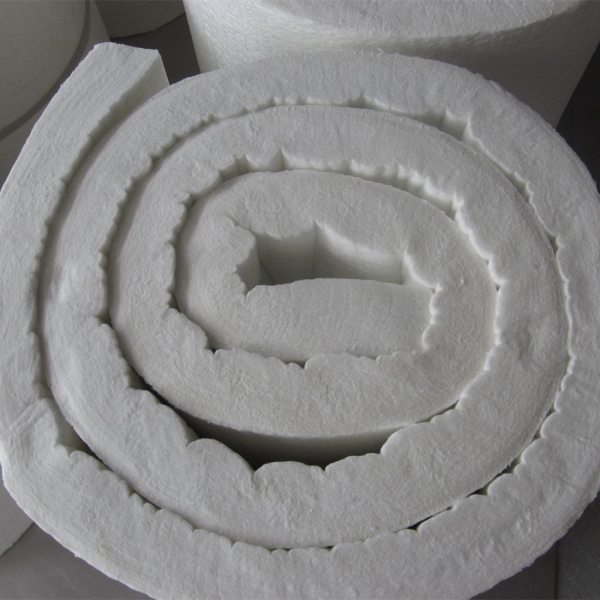
BSTFLEX ceramic fiber blanket is offered in a 6–50 mm thickness range. The appropriate thickness depends on the required thermal performance and the space available in the oven construction. The full range does not mean every thickness, density, roll length and facing combination is a standard stock configuration.
When requesting a quotation, distinguish three dimensions:
- Supplied thickness: the nominal thickness of the blanket before installation.
- Installed thickness: the space occupied after fitting, including compression caused by the retaining system or surrounding panels.
- Available cavity depth: the physical space between the oven lining, casing or adjacent components.
If the blanket is compressed to fit a cavity, state the expected installed condition. Do not assume that compressing a thicker blanket into a smaller space produces the same thermal result as a blanket manufactured for that installed thickness. Compression can change density, contact between layers and the way the insulation is retained.
For a multi-layer design, show the thickness of each layer and the location of its joints. The insulation designer should decide whether joints need to be staggered, overlapped or otherwise arranged to suit the oven construction. Avoid applying a universal overlap distance without considering the material, expected dimensional change and installation method.
Consider Density Alongside Thickness
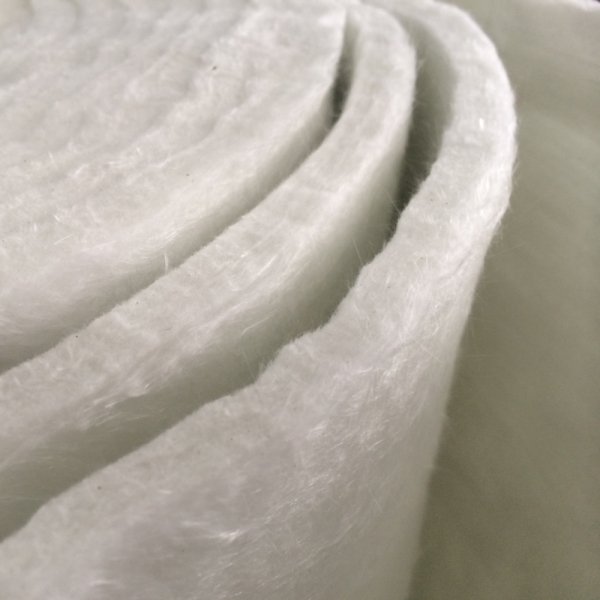
Density is a material specification, not a simple quality ranking. A higher density does not automatically provide the best insulation result for every oven. The selection should account for thermal conductivity at the relevant temperature, installed thickness, handling requirements and the way the blanket is supported.
The current C11 product information lists a density range of 96–128 kg/m³ for the ceramic fiber blanket. Confirm the required density and thickness combination with the quotation and applicable technical data. Do not compare a density value for the bare fiber core with the total mass of a faced or otherwise converted assembly.
For incoming inspection, agree whether density is verified directly or through an agreed mass-per-area and thickness method. Define specimen dimensions, conditioning and measurement procedure. This avoids disputes caused by comparing measurements taken under different compression or conditioning conditions.
Plan the Installation and Retention Method
Ceramic fiber blanket is flexible insulation material. It needs a suitable installation arrangement to keep it in position and protect it from the conditions present in the oven. The correct retention method depends on the oven shell, lining design, orientation, temperature and maintenance plan.
Wall and panel installation
Show the panel layers and the way the blanket is captured or retained. Identify penetrations, fixing points, edges and transitions. Check that fasteners or supports do not create unacceptable local compression or leave uninsulated gaps around the perimeter.
Roof and overhead installation
Describe the support system and the direction in which the blanket is installed. The design should account for the material's own weight, thermal cycling and movement of the oven structure. Do not copy anchor spacing or fixing quantities from an unrelated oven; those values must be determined for the actual lining system.
Door and removable-panel installation
Confirm whether the insulation is fixed to the door, held within a removable cassette or installed as a separate insert. Repeated opening and closing can disturb unsupported edges. A representative trial should check fit, retention and whether the blanket shifts when the panel is handled.
Joints, corners and penetrations
Mark joints, corners, burner openings, sensor penetrations and other interruptions on the drawing. These locations need particular attention because an insulation layer can be continuous on a flat drawing but discontinuous after fabrication. Define how the finished assembly will close around each feature.
Check the Environment Beyond Temperature
Industrial ovens can expose insulation to more than heat. Depending on the process, the material may encounter air movement, vibration, moisture during shutdown, cleaning agents, process vapors or accidental mechanical contact.
Describe the actual exposure rather than using broad terms such as chemical resistant or moisture proof. Identify the substance, concentration where known, temperature and whether contact is continuous or occasional. Ask for grade-specific compatibility information when the atmosphere may affect the fiber or other parts of the construction.
If the blanket is covered by a facing, mesh or panel, specify that layer separately. A facing may help retain the insulation or protect it from handling, but it does not automatically qualify the complete lining for abrasion, gas velocity, chemical exposure or fire-protection requirements.
Set Inspection and Acceptance Requirements Before Ordering
Sample approval should represent the material and installation condition that will be used in production. Agree on the inspection points before the order is placed, especially when the blanket will be cut into shaped pieces or installed in several oven zones.
| Inspection item | What to agree |
|---|---|
| Material identity | Fiber grade, product specification, batch identification and technical documents supplied with the order. |
| Thickness | Nominal value, tolerance, measurement locations and whether measurement is before or after compression. |
| Density or mass | Specified density or areal mass, units, specimen size and whether the value applies to the core or complete converted material. |
| Dimensions | Roll width and length, sheet size or cut-part outline, together with dimensional tolerances. |
| Visual condition | Tears, local thinning, damaged edges, contamination, wet packaging or other agreed defects. |
| Installation trial | Fit around corners and openings, retention, joint closure and installed thickness. |
| Heat-exposure evidence | Test temperature, duration, atmosphere, measurement method and acceptance limit where heat-aged properties are required. |
For a new oven design, approve a representative sample or trial section before releasing repeat production. Record the drawing revision and accepted material specification. If the oven design changes, review whether the original thickness, density, support and joint details remain suitable.
Available Custom Options
For p40 ceramic fiber blanket, the published product range covers 6–50 mm thickness and a listed density range of 96–128 kg/m³, with a nominal width of 1,050 mm. Confirm the available combination, roll length and packing for the required order.
Depending on the project and manufacturing review, buyers can discuss:
- required thickness within the available product range;
- density selection subject to the approved material specification;
- roll dimensions and packing requirements;
- cut lengths, sheets or drawing-based shapes where feasible;
- sample quantities and inspection documentation for approval.
Do not assume that all thickness, density and dimension combinations are standard stock. Send the drawing and annual or batch quantity so the supply format can be reviewed before quotation.
Use Together With
Where an oven assembly requires a separate textile layer or a fabricated heat-resistant cover, review high-temperature ceramic fiber cloth as a separate material. Its role, reinforcement and temperature suitability must be specified for the assembly; it is not automatically included with the plain ceramic fiber blanket.
For a construction that specifically requires an aluminum foil facing, compare the separate ceramic fiber insulation blanket with aluminum foil. The ceramic core, foil and bonding system have different limits and must be assessed separately.
Related Products
- Ceramic Fiber Insulation Blanket — plain blanket material for industrial oven and furnace insulation projects.
- Ceramic Fiber Insulation Blanket With Aluminum Foil — a separate faced construction when an aluminum surface is required.
- Silica Fiber Needled Mat — another insulation material to evaluate when the required fiber grade or thermal duty differs.
- High Temperature Insulation Wools — compare the available insulation material families.
Frequently Asked Questions
What thickness of ceramic fiber blanket should I specify for an industrial oven?
Start with the required thermal performance and the available installation depth. BSTFLEX p40 is offered in a 6–50 mm thickness range. The final selection also depends on the fiber grade, density, operating cycle, installed compression and lining arrangement. Confirm the required combination before ordering.
Does a higher-density ceramic fiber blanket always provide better insulation?
No. Density should be evaluated together with thickness and thermal-conductivity data at the relevant mean temperature. A higher density may change handling and mechanical characteristics, but it should not be treated as an automatic improvement in thermal performance.
Can ceramic fiber blanket be installed directly against the hot face of an oven?
That depends on the selected fiber grade, oven atmosphere, exposure duration and lining design. Confirm whether the blanket is intended as a hot-face layer, backup insulation or an enclosed cavity layer. The material classification value alone does not approve a complete installation.
How should ceramic fiber blanket joints be arranged?
Joint arrangement depends on oven geometry, number of layers, expected dimensional change and retention method. Mark joints and penetrations on the drawing and agree on overlap or staggered arrangements with the insulation designer. Do not apply a universal overlap distance without checking the actual construction.
Can BSTFLEX supply ceramic fiber blanket in custom sizes?
Special thickness, density, length, packing and drawing-based cut-part requirements can be reviewed. Provide the required dimensions, tolerance and quantity for manufacturing review. Confirm the available combination and supply format with the quotation.
Request a Ceramic Fiber Blanket Specification Review
Send the oven drawing or insulation-zone sketch, operating temperature profile, required thickness, density, dimensions and purchasing quantity. Identify whether the blanket is installed behind a hot-face layer, inside a panel cavity or as part of a removable section. Include any thermal-conductivity, shrinkage or heat-exposure documentation required for approval.
BSTFLEX supports project review and sample development through its OEM and custom manufacturing services. For the product specification, visit the BSTFLEX ceramic fiber insulation blanket page. For other fiber families, use the high-temperature insulation material selector.
Request a quotation and sample review with the application details and drawing. A clear installation brief helps align material selection, fabrication and incoming inspection before repeat production.