Bestellung (moq):
1
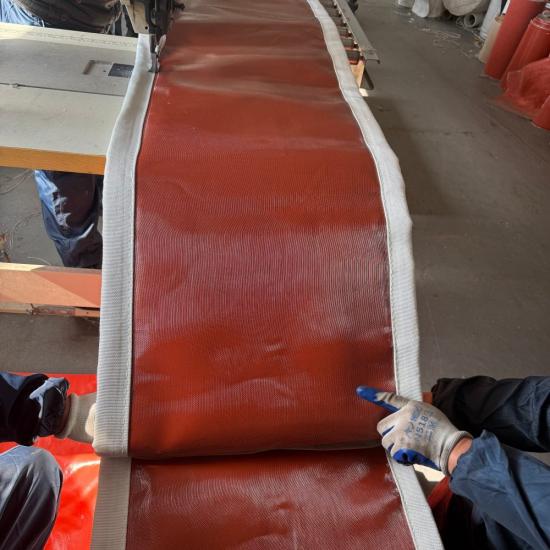
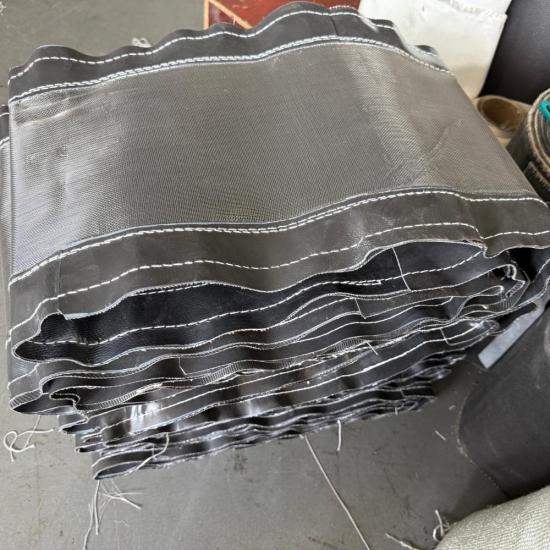
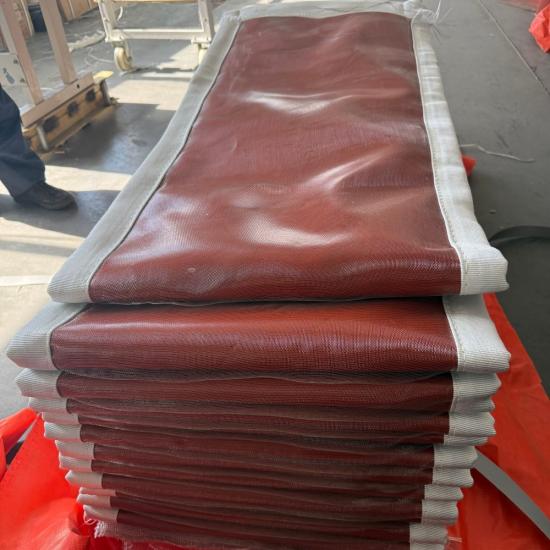
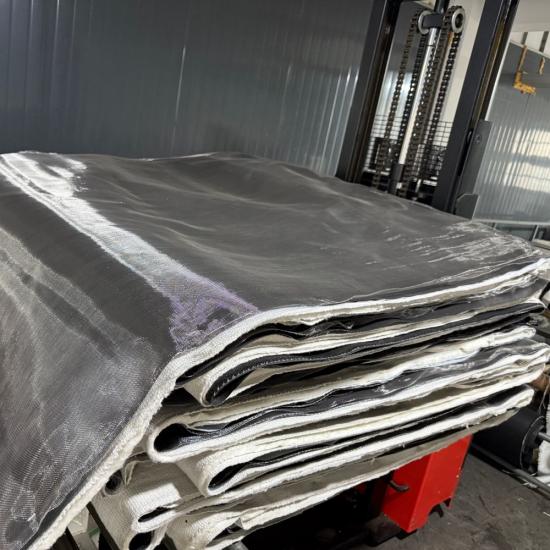
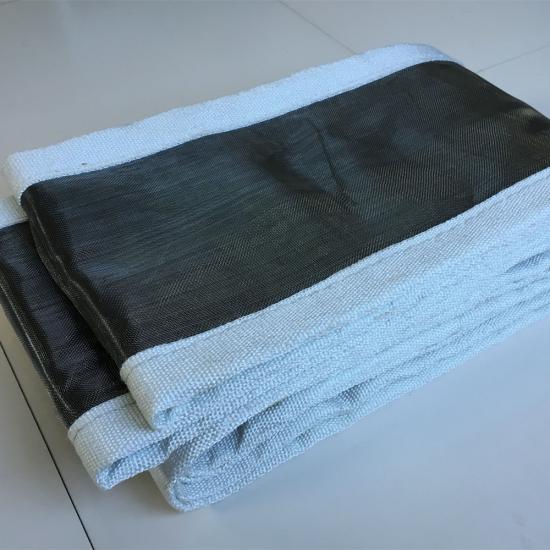
BSTFLEX Nichtmetallische Gewebe-Dehnfugeist ein kundenspezifisch entwickelter flexibler Verbinder, der für industrielle Lüftungskanäle, Heißluft-, Abluft- und Rauchgassysteme konzipiert wurde, bei denen thermische Ausdehnung, Vibrationen, Gerätebewegungen oder Installationsfehler berücksichtigt werden müssen, ohne übermäßige Lasten auf angrenzende Lüftungskanäle und Geräte zu übertragen.
Im Gegensatz zu starren Metallbauteilen,GewebedehnungsfugeEs verwendet eine oder mehrere flexible Textil-, beschichtete Gewebe-, Dichtungs- und Isolierschichten, die je nach Betriebstemperatur, Gaszusammensetzung, Druckbedingungen, Bewegungsanforderungen und Umgebungsbedingungen ausgewählt werden. Das flexible Element kann axiale, laterale und winklige Verschiebungen aufnehmen und gleichzeitig eine kontrollierte Verbindung zwischen zwei Kanalabschnitten gewährleisten.
BSTFLEX fertigt runde, rechteckige, quadratische und anwendungsspezifischenichtmetallische Dehnungsfugenfür Erstausrüster (OEM), Lüftungsanlagenbauer, Kraftwerksbetreiber, Zementwerke, Stahlverarbeitungsanlagenhersteller, Industrieofenhersteller, Lüftungsanlagenhersteller und andere Hochtemperatur-Prozessanlagen.
| Produkt | Nichtmetallische Gewebe-Dehnfuge |
| Alternative Namen | Gewebe-Dehnungsfuge, Gewebekanal-Dehnungsfuge, Verbundgewebe-Dehnungsfuge, nichtmetallischer Kompensator |
| Konstruktion | Ein- oder mehrlagige flexible Konstruktion |
| Formen | Runde, rechteckige, quadratische und benutzerdefinierte Geometrien |
| Bewegung | Axiale, laterale, Winkel- und kombinierte Bewegung |
| Typische Medien | Heißluft, Abgase, Rauchgase und industrielle Prozessgase |
| Materialien | Ausgewählt nach Temperatur, Medium, chemischer Belastung, Abriebfestigkeit und mechanischen Anforderungen |
| Größe | Kundenspezifisch nach Zeichnung oder Einbaumaßen gefertigt |
| Anwendung | Industrielle Lüftungsanlagen, Abgasanlagen, Ofen-, Kessel-, Ventilator- und Prozessluftsysteme |
Anichtmetallische GewebedehnungsfugeEs handelt sich um eine flexible Verbindung, die zwischen Abschnitten von industriellen Rohrleitungen oder Anlagen installiert wird, um Bewegungen auszugleichen, die andernfalls Spannungen im System verursachen würden. Wärmeausdehnung ist eine der häufigsten Ursachen für Bewegungen, aber auch Vibrationen, Anlagenverschiebungen, Fertigungstoleranzen und strukturelle Bewegungen müssen gegebenenfalls berücksichtigt werden.
Der flexible Korpus wird üblicherweise aus technischen Textil- und beschichteten Gewebeschichten anstelle eines geformten Metallbalgs hergestellt. Je nach Einsatzbedingungen kann die Konstruktion eine gasdichte Membran, ein Verstärkungsgewebe, eine Wärmedämmung und eine innere Schutzschicht umfassen.
Diese Konstruktion macht eineGewebedehnungsfugebesonders geeignet für große Kanalquerschnitte, heiße gasförmige Medien und Anwendungen, die eine Bewegung in mehr als einer Richtung erfordern.
Industrielle Kanalsysteme dehnen sich bei Temperaturänderungen aus und ziehen sich zusammen. Wird diese Bewegung vollständig behindert, können thermische Spannungen auf Kanalwände, Flansche, Ventilatoren, Geräteanschlüsse und Tragkonstruktionen übertragen werden.
Ein flexiblerDehnungsfuge für TextilkanäleEs entsteht eine kontrollierte Bewegungszone zwischen benachbarten Abschnitten. Wenn sich der Kanal ausdehnt, zusammenzieht oder verschiebt, ändert der flexible Abschnitt seine Geometrie, anstatt die gesamte Verschiebung auf starre Bauteile zu übertragen.
Je nach Geometrie der Fuge und Systemauslegung kann die Dehnungsfuge Folgendes aufnehmen:
Es gibt keine universelle Gewebekonstruktion, die für jede industrielle Dehnungsfuge geeignet ist. Eine zuverlässige Konstruktion beginnt mit den tatsächlichen Betriebsbedingungen.
Ein mehrschichtiges System kann mehrere Funktionsschichten enthalten, von denen jede eine andere Aufgabe erfüllt:
Die gasdichte Schicht dient der Abdichtung des Prozessmediums und wird entsprechend Temperatur, Gaszusammensetzung, Feuchtigkeit, Chemikalienbelastung und Druckbedingungen ausgewählt. Je nach Anwendung kommen beschichtete Glasfasern oder Materialien auf Fluorpolymerbasis zum Einsatz.
Die Verstärkungsschicht verleiht dem flexiblen Element Formstabilität und mechanische Stabilität. Je nach den erforderlichen mechanischen und thermischen Eigenschaften können gewebte Glasfasern und andere technische Textilien ausgewählt werden.
Hochtemperatursysteme benötigen unter Umständen eine Isolierschicht, um die Temperatur der äußeren Dichtungsmaterialien zu reduzieren. Isolierstärke und -material müssen entsprechend der Gastemperatur, den äußeren Temperaturgrenzen und der Geometrie der Verbindung ausgelegt werden.
Wenn die Dehnungsfuge hohen Gasgeschwindigkeiten, Partikeln oder abrasiven Medien ausgesetzt ist, kann ein internes Schutzsystem oder eine Strömungsauskleidung erforderlich sein, um das direkte Auftreffen auf das flexible Element zu reduzieren.
Die Materialauswahl ist einer der wichtigsten Aspekte vonKonstruktion von nichtmetallischen DehnungsfugenBSTFLEX arbeitet mit einer breiten Palette vonHochtemperaturgewebeund beschichtete technische Textilien, die es ermöglichen, die flexible Konstruktion an unterschiedliche industrielle Umgebungen anzupassen.
| Materialart | Typische Funktion | Auswahlkriterien |
|---|---|---|
| Glasfasergewebe | Reinforcement and thermal-resistant textile layer | Temperature, weight, weave and mechanical strength |
| Silicone Coated Fiberglass | Flexible outer or sealing layer | Temperature, weather resistance, flexibility and environment |
| PTFE Coated Fabric | Gas sealing and chemical-resistant layer | Chemical compatibility, temperature and process media |
| Silica Fabric | High-temperature thermal protection layer | Temperature exposure and insulation requirement |
| Insulation Materials | Reduction of temperature through the joint construction | Operating temperature and required external surface temperature |
| Metal Mesh or Internal Liner | Mechanical or flow protection where required | Gas velocity, abrasion, particles and installation geometry |
For particularly demanding thermal environments, BSTFLEX can evaluate high-silica textile solutions such as96% high temperature silica fabricas part of the overall thermal protection system where technically appropriate.
The final material combination should always be determined from actual application data rather than temperature alone.
Ahigh temperature fabric expansion jointis not defined by one universal maximum temperature. The permissible operating temperature depends on the complete joint construction, including the hot-face protection, insulation package, reinforcement fabric, gas seal membrane, external cover and the temperature distribution through those layers.
For this reason, BSTFLEX evaluates both process temperature and the temperature expected at individual layers of the expansion joint. This approach allows the materials to be selected for their actual operating environment rather than relying on a single generic temperature rating.
When requesting a high-temperature joint, provide the normal operating temperature, maximum or upset temperature, exposure duration and process medium wherever possible.
BSTFLEX manufactures expansion joints according to the shape and dimensions of the customer's ducting system.
Arectangular fabric expansion jointis commonly used on large industrial ductwork, boiler systems, air-handling equipment, furnace connections and flue-gas ducts. Corner geometry, movement distribution and attachment design require particular attention because stress is not distributed in the same way as on a circular joint.
Round and circular fabric expansion joints are suitable for cylindrical duct systems, fan connections, exhaust lines and process-air installations. Diameter, face-to-face length and movement requirements can be manufactured according to the installation.
Non-standard shapes, transitions and asymmetric configurations can be evaluated when standard round or rectangular joints cannot match existing equipment.
Different attachment arrangements can be supplied depending on the duct design and replacement requirements.
Belt-type fabric expansion jointsuse a flexible belt attached to mating metalwork and are suitable for many large industrial duct applications.
Flanged fabric expansion jointscan be manufactured as complete assemblies where the flexible element, insulation components and supporting metalwork are supplied as an integrated unit.
For replacement projects, BSTFLEX can manufacture according to customer drawings, dimensional records or available sample information.
BSTFLEXnon metallic fabric expansion jointscan be engineered for a broad range of hot-air and process-gas ducting systems.
Fabric joints can be used in boiler ducting, flue-gas handling systems, fan connections and other large gas-transport ducts where thermal movement and vibration need to be isolated.
Cement production involves large ductwork exposed to heat, dust and continuous equipment movement. Expansion joints may be used around kiln-related ducting, process-air systems, fans and gas-handling equipment.
Furnace exhaust, hot-air ducts and process ventilation systems may require flexible connections capable of accommodating thermal growth while operating around demanding high-temperature equipment.
Where process gases contain corrosive constituents, joint materials should be selected according to chemical compatibility as well as temperature.
Fabric joints can compensate for expansion between heated equipment and downstream ductwork while helping isolate movement and vibration.
Flexible expansion joints can reduce the transmission of mechanical vibration between fans, blowers and rigid ducting.
High-temperature exhaust and hot-gas systems often require a flexible transition capable of accommodating repeated thermal cycles and installation movement.
| Design Factor | Fabric Expansion Joint | Metal Expansion Joint |
|---|---|---|
| Flexible Element | Technical fabric or composite textile construction | Formed metallic bellows |
| Typical System | Industrial ducting and gaseous-media systems | Pipe and process systems including higher-pressure service |
| Large Cross Sections | Well suited to large duct dimensions | Possible but design becomes more complex |
| Multidirectional Movement | Can accommodate axial, lateral and angular movement | Depends strongly on bellows configuration |
| Vibration Isolation | Good flexibility for fan and duct connections | Application dependent |
| Material Selection | Composite layers can be selected for thermal and chemical conditions | Determined mainly by metal alloy and bellows design |
The correct choice depends on pressure, temperature, process medium, duct geometry, required movement and applicable engineering standards. Fabric and metallic expansion joints should therefore not be treated as universally interchangeable products.
Selecting an expansion joint only by duct size or maximum temperature is not sufficient. Several operating parameters interact with each other and influence the appropriate construction.
The following information should be evaluated:
Providing this information allows the flexible element and supporting components to be selected around the real service conditions.
For faster engineering evaluation and quotation, send as much of the following information as available:
| Duct Size | Diameter or width × height |
| Joint Shape | Round, rectangular, square or custom |
| Installation Length | Face-to-face dimension |
| Operating Temperature | Normal continuous temperature |
| Maximum Temperature | Maximum or upset temperature and duration |
| Pressure | Normal and design pressure |
| Process Medium | Air, flue gas, exhaust gas or other process gas |
| Axial Movement | Compression and extension |
| Lateral Movement | Required offset movement |
| Angular Movement | Required angular displacement if applicable |
| Environment | Indoor, outdoor, chemical, dusty, wet or abrasive |
| Drawing | PDF, CAD drawing, dimensional sketch or existing joint details |
| Quantity | Prototype, replacement quantity or production requirement |
Industrial expansion joints are frequently project-specific components rather than standard catalogue parts. BSTFLEX supports customized manufacturing according to drawings, dimensional requirements and operating conditions.
Custom options may include:
Because BSTFLEX also works directly with thermal protection textiles and coated high-temperature fabrics, material construction can be evaluated as part of the expansion joint design instead of treating the flexible element as a generic component.
BSTFLEX focuses on engineered thermal protection and technical textile products for industrial applications. Our manufacturing capabilities cover high-temperature woven fabrics, coated fabrics, insulation materials and fabricated thermal components, providing a practical material base for customfabric expansion jointprojects.
A non metallic expansion joint is a flexible connection used primarily in ducting and gaseous-media systems to accommodate thermal expansion, vibration, misalignment and multidirectional movement. Its flexible element is normally manufactured from technical fabrics, coated textiles, insulation and other non-metallic materials selected according to the operating environment.
A fabric expansion joint uses a flexible textile or composite membrane, while a metallic expansion joint normally uses formed metal bellows. Fabric joints are widely used on large industrial ducts and gas-handling systems, while metallic bellows are common in piping and applications where system pressure or process requirements favor metallic construction.
Yes. Properly designed fabric expansion joints can accommodate axial, lateral and angular movement as well as combinations of these movements. The required movements must be provided during design so the joint geometry can be selected correctly.
There is no single temperature rating for every fabric expansion joint. Temperature capability depends on the flexible membrane, insulation package, hot-face protection, sealing material and overall joint construction. BSTFLEX selects the material system according to the normal operating temperature, maximum temperature and exposure conditions.
Depending on the application, materials may include fiberglass fabric, silicone-coated fiberglass, PTFE-coated fabric, silica fabric, insulation materials and metallic protective components. Each layer is selected according to its specific function.
Yes. Fabric expansion joints are widely applicable to industrial flue-gas and hot-gas ducting when the construction is engineered for the process temperature, chemical composition, moisture, pressure, gas velocity and movement requirements.
Yes. BSTFLEX manufactures rectangular, round, square and other custom configurations according to duct dimensions and installation requirements.
In many cases, yes. Dimensional measurements, photographs, operating conditions and information from the existing expansion joint can be used for an initial evaluation. A complete drawing or physical sample provides additional information when available.
The most useful information includes duct dimensions, joint shape, face-to-face length, operating and maximum temperature, pressure, process medium, axial movement, lateral movement, angular movement, gas velocity, chemical exposure, flange arrangement and required quantity. Drawings are strongly recommended where available.
Wenn Sie eine Ersatz-Dehnungsfuge benötigen oder ein neues industrielles Lüftungssystem entwickeln, senden Sie BSTFLEX Ihre Zeichnung und die Betriebsbedingungen. Unser Team kann die erforderliche Form, Abmessungen, flexiblen Materialien, die Isolierungskonstruktion und die Bewegungsanforderungen für Ihre Anwendung ermitteln.
Für ein Angebot benötigen wir folgende Angaben:Kanalabmessungen, Temperatur, Druck, Prozessmedium, Bewegungsanforderungen, Installationslänge, Menge und verfügbare Zeichnungen.
Fordern Sie ein Angebot für Ihr Projekt zur Herstellung von Gewebedehnungsfugen an.
Vorherige:
tig finger hitzeschildNächste:
Isolierdecke für SpritzgießmaschinenWenn Sie Fragen oder Anregungen haben, hinterlassen Sie uns bitte eine Nachricht, wir werden Ihnen so schnell wie möglich antworten!

 English
 français
 русский
 italiano
 español
 português
 Nederlands
 العربية
 日本語
日本語 한국의
한국의 Türkçe
 Polski
 Tiếng Việt
 slovenský
 Indonesia