Frayed thread, repeated stops and uneven stitches can slow the production of insulation jackets, thermal covers and other industrial fabric assemblies. When introducing PTFE coated fiberglass sewing thread, the first task is to establish a sewing setup that suits both the thread and the complete fabric stack.
BSTFLEX PTFE Coated Fiberglass Sewing Thread uses continuous E-glass fibers with a PTFE finish to improve sewability and reduce friction. For manufacturers evaluating this construction, needle selection, thread tension and a representative seam trial provide a practical starting point.
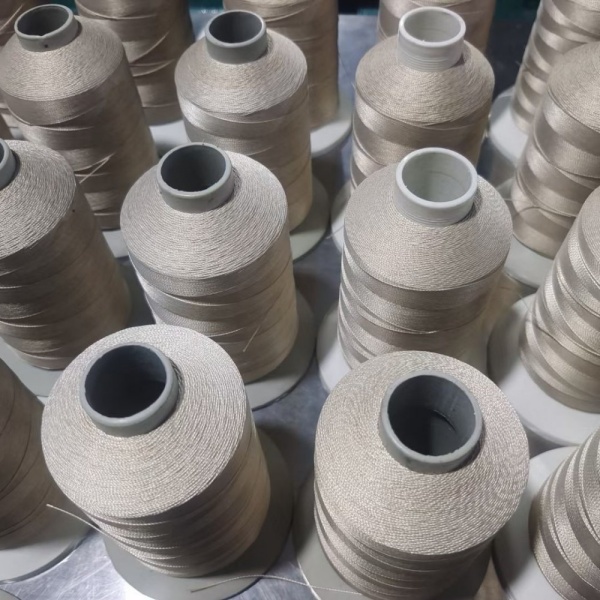
PTFE coated fiberglass sewing thread combines a glass fiber structure with a PTFE surface treatment. It is different from thread made entirely from PTFE. When comparing quotations, specify the underlying fiber and the finish so that suppliers are quoting the same type of product.
The BSTFLEX product range lists PTFE coated options in Tex 156 and Tex 208. Tex describes linear density: the mass in grams of 1,000 meters of thread. It is not the finished thread diameter or a sewing needle size. Confirm the selected construction and current specification before ordering production quantities.
There is no single needle size that fits every fiberglass sewing thread application. Begin with the needle system specified for the sewing machine. Then select a size and point suitable for the thread and the material being joined.
The thread needs adequate clearance through the needle eye and along the groove. A combination that creates excessive rubbing can damage the thread during stitching. However, simply moving to a much larger needle can leave unnecessary holes or damage the fabric. Evaluate thread passage and the condition of the sewn material together.
Include folded edges, binding and changes in thickness in the needle trial. Record the needle system, size and point style beside each sample. This creates a useful reference when the same order returns or production moves to another machine.
PTFE coating helps the thread travel through the sewing process, but it does not remove the need for a smooth thread path. Inspect guides, tension components, the needle area and bobbin components for worn surfaces, burrs or places where the thread catches.
Also check how the thread unwinds from its package. Intermittent snagging can make a sewing problem appear inconsistent. Ask the machine technician to correct damaged or unsuitable components before attempting to compensate with tighter tension.
For lockstitch sewing, aim for a balanced stitch with the minimum thread tension needed to form it reliably. Inspect both sides of the seam. Loose loops, puckering or an uneven stitch balance are reasons to review the setup.
Adjust one setting at a time and sew another sample before making the next change. Changing needle size, upper tension and bobbin tension together makes the cause of an improvement difficult to identify. Record the settings that produce an acceptable seam on the actual assembly.
A tighter stitch is not automatically a stronger finished seam. Thread choice, fabric condition, stitch type and seam construction also affect performance. Review these factors together when a sample does not meet the application requirement.
Do not assume that a machine speed used successfully with polyester or aramid thread will also suit PTFE coated fiberglass thread. Begin the trial at a reduced speed and increase it only while stitch formation and thread condition remain acceptable.
For your production comparison, record completed seam length, sewing time, thread breaks and repair time. Include starts, stops and thickness transitions. These observations help identify a workable production setting for the tested assembly.
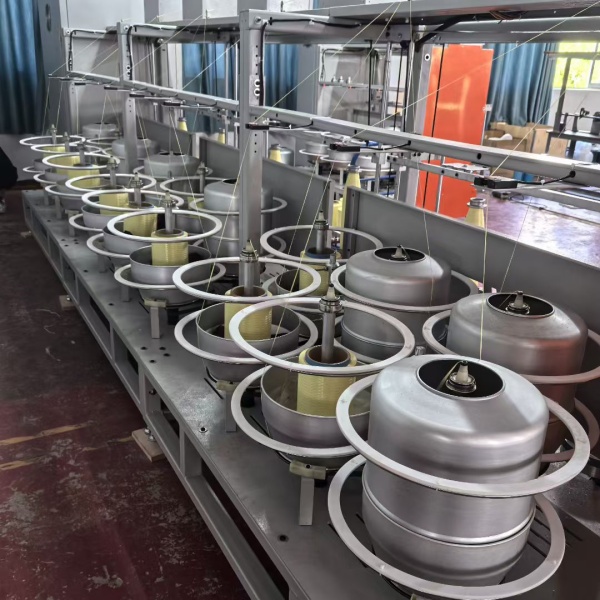
If the thread becomes visibly frayed near the needle, review the needle condition, thread clearance and nearby contact surfaces. If interruptions occur mainly at folded edges, repeat the trial using that exact stack of layers. A flat coupon alone will not show how the machine handles the thickest part of the product.
If stitching looks acceptable but the completed sample fails during handling, record what actually failed. Did the thread break, the fabric tear at the stitch line or the seam open? Each observation points to a different part of the assembly to investigate.
Keep rejected samples with their trial notes. A photograph of the seam and the failure location, together with the machine and thread details, gives a supplier more useful information than a report that the thread keeps breaking.
Use production fabrics, coatings, insulation layers and edge treatments in the final trial. Define acceptance criteria before comparing samples, including stitch appearance, permissible defects and the mechanical performance required by the finished product.
For an assembly exposed to heat, specify the conditions at the seam: continuous exposure, short peaks, exposure duration and any repeated heating and cooling. Have the selected construction evaluated under representative conditions. A fiber description or a successful room-temperature sewing trial alone does not establish the service rating of the finished seam.
To discuss PTFE coated fiberglass sewing thread from BSTFLEX, send the fabric types, number of layers, approximate seam thickness, machine model and current thread specification. Include the required service conditions, intended order quantity and any problems observed during sewing.
If available, provide a seam drawing or photographs of the assembly. Ask for the current thread specification, sample availability and packaging options so that the proposed material can be evaluated before production purchasing.
For projects requiring a different fiber or a reinforced construction, review the BSTFLEX high temperature sewing thread range and identify the seam requirements with your inquiry.

 English
 français
 русский
 italiano
 español
 português
 Nederlands
 العربية
 日本語
 한국의
 Türkçe
 Polski
 Tiếng Việt
 slovenský
 Indonesia