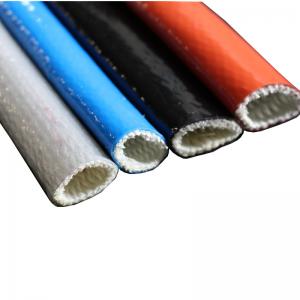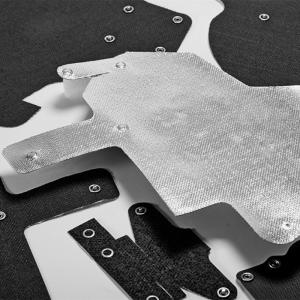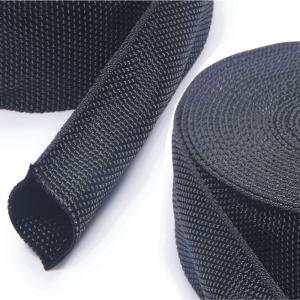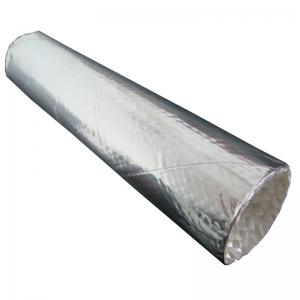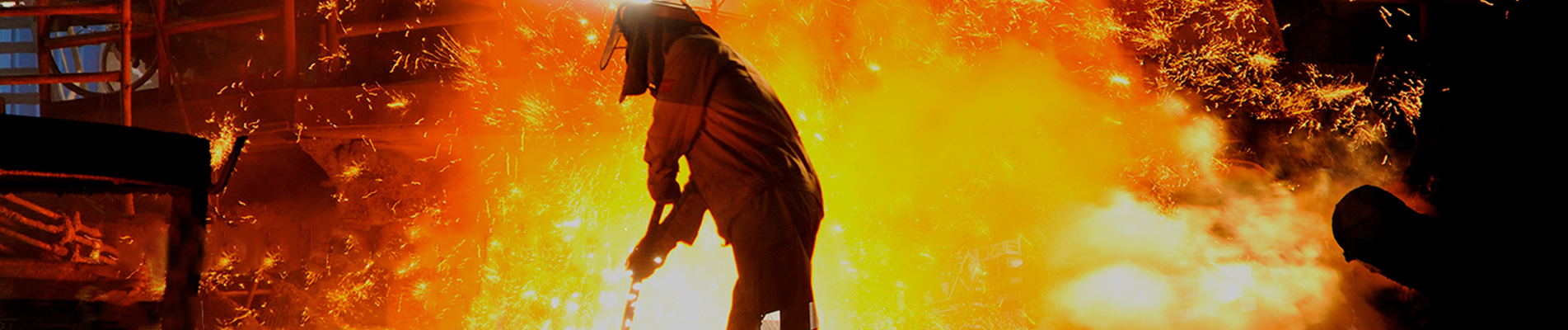
A welding blanket can cover the visible side of a ship-repair job and still leave the wrong area protected.
Hot particles may pass through an opening, fall to a lower deck, reach the opposite side of a bulkhead or collect behind cables, insulation and equipment. The blanket material matters, but so do the installation position, surrounding structure and route taken by sparks and slag.
This is why a welding blanket for shipbuilding should not be selected from temperature rating alone.
The buyer needs to consider the hot-work process, whether the protection is horizontal or vertical, what lies behind the workpiece, how the blanket will be secured and whether the material must withstand occasional use or repeated shipyard handling.
BSTFLEX supplies industrial welding blankets and hot-work protection materials for shipbuilding, ship repair, metal fabrication and maintenance projects. Roll goods, cut panels and custom finished blankets are available for distributors, fabricators and OEM buyers.
A workshop welding station is often open and easy to inspect. Work on a vessel can take place beside tanks, cable runs, painted surfaces, pipework, machinery and enclosed compartments.
The protective layout therefore needs to consider more than the area directly below the torch.
Before choosing a shipyard welding blanket, review:
A blanket is one part of shipyard hot-work protection. The site still needs the required work authorization, atmospheric checks where applicable, fire watch, ventilation, extinguishing equipment and inspection of adjacent spaces.
The phrase shipyard welding blanket can describe several different products.
One blanket may lie over a painted machine. Another may hang beside a welding station. A third may be wrapped around a pipe or placed below oxy-fuel cutting.
These jobs require different material and fabrication decisions.
| Protection Job | Product Form to Review | Main Selection Issue |
|---|---|---|
| Protecting equipment below welding | Finished welding blanket | Hot-particle contact and heat reaching the protected surface |
| Containing sparks beside the work | Welding curtain or hanging blanket | Vertical coverage, overlap, reinforcement and attachment points |
| Severe downward exposure from cutting | Application-specific blanket or welding pad | Slag dwell time and documented suitability for the exposure |
| Protecting a pipe or irregular component | Flexible blanket or custom fabricated cover | Drape, clearances, fastening and access |
| Reducing radiant heat near hot machinery | Aluminized blanket or reflective panel | Reflective-face orientation and distance from the heat source |
| Local fabrication by a shipyard supplier | Welding blanket roll goods | Material, usable width, roll length, cutting yield and sewing capability |
A vertical welding curtain for shipbuilding is commonly used to separate the work area from adjacent equipment and personnel routes.
Many sparks that strike a vertical curtain fall away quickly. This can make a flexible fiberglass construction suitable for routine work, provided the material matches the actual spark and spatter level.
The installation still needs careful detailing.
A curtain with the correct fabric can fail to protect the area if:
For a hanging panel, the RFQ should state the finished width and height, which edge is the top, required overlap and the exact grommet or hook arrangement.
A blanket placed below hot work faces a different condition.
Sparks, spatter or cutting slag can land on the fabric and remain there. Folds and low points may collect hot material rather than allowing it to move away.
The selection needs to account for:
A vertical curtain specification should not be transferred automatically to severe horizontal use.
Where the exposure is beyond ordinary sparks and moderate spatter, the buyer should describe the cutting or welding process in detail and request a construction supported for that duty.
The correct material depends on the type of heat, the severity of the particles and how the blanket will be handled.
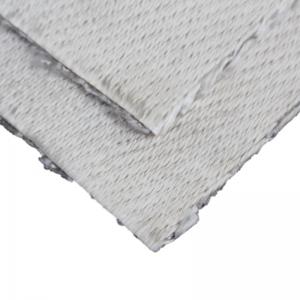
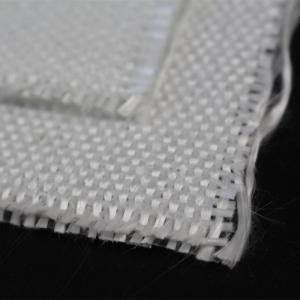
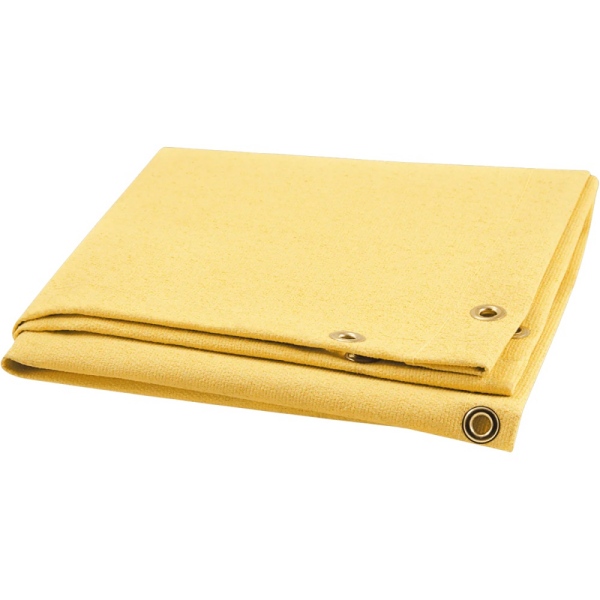
Heat-cleaned fiberglass is an economical starting point for routine welding, temporary barriers and general spark protection.
It is uncoated and remains flexible for cutting and sewing. It is often appropriate for vertical barriers and jobs where severe slag accumulation is not expected.
BSTFLEX supplies Heat Cleaned Fiberglass Welding Blanket Roll for shipyard suppliers and fabricators that manufacture panels locally.
Choose it because the job suits an uncoated fiberglass textile—not simply because it is the lowest-cost option.
Ship-repair blankets may be installed, folded, stored and used again during several stages of a project.
Acrylic coated fiberglass offers a more stable surface than plain fiberglass and can reduce exposed surface fibers during repeated handling.
It is useful for general welding curtains, reusable protective panels and finished blankets where moderate abrasion resistance is important.
BSTFLEX supplies Acrylic Coated Fiberglass Welding Blanket Roll and finished Acrylic Coated Fiberglass Welding Blankets.
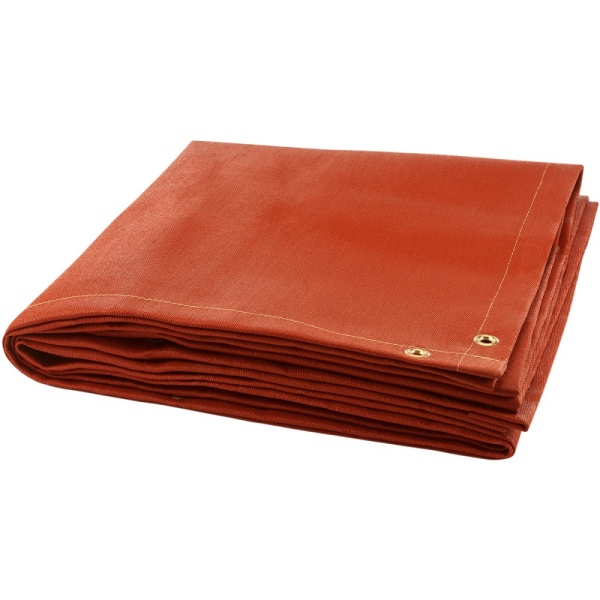
Silicone coated fiberglass is worth reviewing when a blanket will be handled frequently or exposed to moisture, oil and ordinary industrial contamination.
The coated surface offers improved abrasion resistance and is generally easier to clean than an exposed fiberglass weave.
Its thermal limit must be based on the complete coated construction. The temperature capability of the fiberglass substrate should not be assigned automatically to the silicone surface.
For finished protection, see the Silicone Coated Fiberglass Welding Blanket.
Vermiculite coated fiberglass uses a mineral treatment rather than a rubber coating.
It is available in heavier constructions and should be considered where the work creates more demanding sparks, spatter and thermal exposure than a general uncoated fiberglass blanket is intended to handle.
The material can be converted into heavy opaque curtains, blankets and protective panels.
BSTFLEX supplies Vermiculite Coated Fiberglass Welding Blanket Roll for converters and industrial buyers.
A silica welding blanket for shipbuilding should be evaluated when the sustained thermal requirement is beyond the range normally addressed by conventional fiberglass constructions.
Silica is relevant to heavy welding, cutting and maintenance around high-temperature equipment, but the word silica is not a complete specification.
The buyer should still define:
BSTFLEX manufactures Silica Fabric Welding Blankets for demanding industrial hot-work applications.
Silicone coated silica combines a silica textile with a coated surface.
This can be useful where the base material needs higher thermal capability but the finished blanket will also be handled and reused.
The silicone coating still has its own service limitation, separate from the silica fabric underneath.
See the Silicone Coated Silica Welding Blanket.
Not every shipyard heat problem comes from direct sparks.
Hot exhaust components, heated plate and nearby machinery can expose personnel or equipment to strong radiant heat.
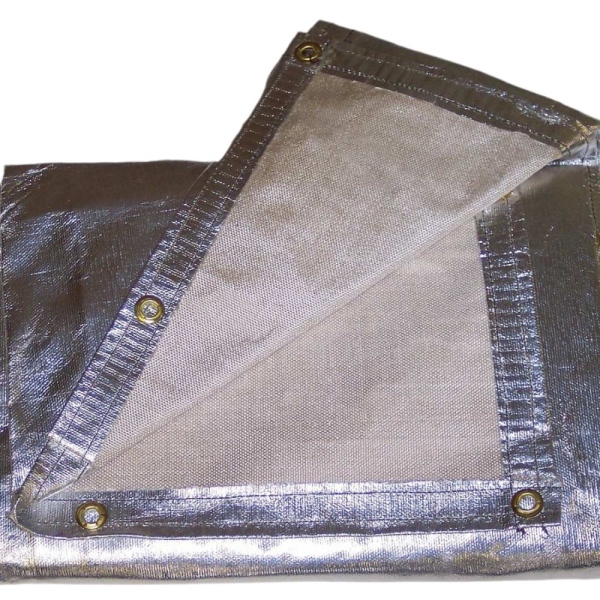
An aluminized surface reflects radiant energy and can be used in heat-reflective curtains, panels and blankets where the metallic face is directed toward the heat source.
It should not be chosen automatically for severe direct slag contact. Radiant heat reflection and molten-particle resistance are different requirements.
BSTFLEX supplies the finished Aluminized Fiberglass Welding Blanket and Aluminized Fiberglass Welding Blanket Roll for local fabrication.
Carbon felt is soft and conformable. It can be useful around pipes, brackets and irregular equipment where a stiff woven blanket is difficult to position.
The material should be selected using its open-air welding data. Carbon-felt temperatures quoted for furnace service under vacuum or inert atmosphere should not be applied directly to shipyard hot work.
See the Carbon Fiber Felt Welding Blanket.
Measuring only the object being protected is rarely enough.
A blanket draped over machinery needs material for the top surface, side drops and any required overlap. A vertical curtain may need extra width where two panels meet. A blanket wrapped around a pipe needs enough length for the full circumference and fastening arrangement.
State the required finished dimensions after sewing.
For example:
Finished panel: 2000 mm wide × 3000 mm high. The 2000 mm edge is the top.
This is clearer than writing only “2 × 3 blanket.”
A 6 × 8 ft welding blanket measures 1828.8 × 2438.4 mm. It is not the same as a 1800 × 2400 mm blanket.
Use one unit as the controlling dimension and show the converted value only as a reference.
The usable width of the raw fabric determines whether a large blanket can be made from one piece.
If the required finished width exceeds the material width, the normal solution is to join panels.
The drawing should identify:
A request for a custom-size welding blanket does not automatically mean seamless construction.
Shipyard curtains and hanging blankets are often attached to temporary frames, cables or existing structures.
The phrase “grommets every 18 inches” is not a complete drawing instruction.
It does not identify the first hole location, corner offset, edge offset or whether the final interval should be adjusted.
| Attachment Detail | Information to Include |
|---|---|
| Grommet Material | Brass, stainless steel or another agreed material |
| Inside Diameter | Required opening for hook, cable or fastener |
| Position | Top edge, corners, selected sides or complete perimeter |
| Pitch | Center-to-center distance or maximum permitted spacing |
| Edge Offset | Distance from grommet center to finished edge |
| Corner Offset | Distance from first and last grommets to the corners |
| Reinforcement | Local patch or continuous reinforced border |
Where the blanket must fit an existing frame, send a dimensioned drawing of the attachment points.
Some shipyards and local marine suppliers manufacture their own blankets and curtain panels.
For these buyers, a welding blanket roll for shipbuilding can provide more flexibility than stocking many finished dimensions.
Roll-goods purchasing should define:
A wider roll is not always more economical. The best width is the one that fits the cutting plan with the least unusable material.
Review the complete Welding Blanket Rolls & Roll Goods range for heat-cleaned, acrylic coated, vermiculite coated and reflective welding fabrics.
A blanket directly beneath the work does not protect every path a hot particle can take.
Before starting the job, inspect:
Protective covers also need inspection during the work. A blanket that has shifted, folded into a pocket or developed a damaged area may no longer protect the intended surface.
A light vertical spark curtain, a horizontal cutting blanket and a radiant heat shield do not require the same construction.
The quoted temperature may apply to the base fiber rather than the complete coated or laminated material.
Heat and sparks can affect another compartment or hidden space even when the visible side is covered.
A loose blanket can form pockets where hot particles remain in contact with the fabric.
A swatch does not approve seams, thread, reinforcement, grommets or the finished panel size.
An aluminized surface is primarily intended for radiant heat reflection. Direct particle exposure needs separate review.
Standard spacing may not match the frame or attachment points used at the shipyard.
| RFQ Item | Information to Provide |
|---|---|
| Project Type | New ship construction, ship repair, refit, maintenance or offshore work |
| Hot-Work Process | Welding, cutting, grinding, brazing, gouging or another process |
| Exposure | Sparks, spatter, slag, radiant heat, direct contact or combination |
| Installation | Horizontal, vertical, draped, wrapped or frame-mounted |
| Protected Area | Machinery, deck, bulkhead, cable, hose, paint, insulation or other surface |
| Material | Preferred material or request for BSTFLEX recommendation |
| Weight and Thickness | Required GSM, oz/yd² and thickness where already specified |
| Finished Size | Width and length after sewing |
| Seams | Permitted locations and orientation |
| Edges | Hem, binding, reinforcement or proposed construction |
| Attachments | Grommet material, diameter, spacing and location drawing |
| Quantity | Sample, first order and annual or project forecast |
| Packaging | Individual bags, cartons, pallet limits and export marks |
| Documents | Technical data, test requirements and inspection documents |
| Delivery | Shipyard, port, country and required project date |
The following example gives the manufacturer enough information to begin material and construction review.
| RFQ Field | Example |
|---|---|
| Application | Vertical spark and spatter barrier for ship-repair welding |
| Work Location | Machinery-space maintenance area |
| Exposure | Routine welding sparks and moderate spatter; no sustained molten-metal pooling expected |
| Material | Manufacturer to propose fiberglass-based construction for sample approval |
| Finished Size | 1800 mm wide × 2500 mm high after sewing |
| Orientation | 1800 mm edge is the top |
| Edges | Reinforced on all four sides |
| Grommets | Top edge and both vertical sides; positions per drawing |
| Seams | No seam within the central 600 mm working zone |
| Label | Customer part number and finished size |
| Sample | One finished sample required before production |
| Quantity | First order quantity and annual forecast stated separately |
| Delivery | Required port and project date included in RFQ |
There is no single best construction. Heat-cleaned fiberglass is an economical option for general sparks, coated fiberglass offers improved handling, vermiculite treated fiberglass serves more demanding hot work, silica is considered for higher thermal exposure, and aluminized fabric is used primarily for radiant heat.
A curtain is primarily a vertical barrier used to contain the work area. A blanket usually covers equipment, decks or components and may be horizontal, draped or wrapped. Material suitability still depends on the actual exposure.
Yes, where the selected fiberglass construction matches the sparks, spatter, orientation and service conditions. General fiberglass should not automatically be used for severe slag or molten-material exposure.
Silica should be evaluated where sustained thermal exposure is beyond the intended range of conventional fiberglass materials. The silica grade, weight, thickness and finished construction still need to be specified.
Yes. Provide the finished dimensions after sewing, orientation, seam restrictions, reinforcement and attachment-point drawing.
That depends on the usable width of the selected fabric. Large blankets may require joined panels. Seam locations should be agreed before sample production.
Yes. BSTFLEX supplies full rolls, selected cut lengths, cut panels and finished welding blankets for converters, distributors and OEM programs.
No. The blanket is one protective component. Site authorization, atmospheric controls where applicable, inspection of adjacent spaces, fire watch, ventilation and extinguishing equipment remain part of the shipyard’s hot-work procedure.
Send BSTFLEX the shipbuilding or repair process, work location, sparks or slag exposure, blanket position, protected equipment, preferred material, finished dimensions, seam restrictions, attachment drawing, quantity and delivery requirement.
If the material has not been selected, include photographs or a marked sketch of the work area. This allows the proposed blanket, curtain or roll material to be matched to the actual installation rather than to a generic temperature number.
BSTFLEX can supply roll goods, cut panels and custom finished welding blankets for shipyard suppliers, industrial distributors and OEM purchasing programs.
Browse the complete Welding & Soldering Area Protection range, review Welding Blanket Rolls & Roll Goods, or submit the project through BSTFLEX Custom Capabilities & OEM Services.

 English
 français
 русский
 italiano
 español
 português
 Nederlands
 العربية
 日本語
 한국의
 Türkçe
 Polski
 Tiếng Việt
 slovenský
 Indonesia